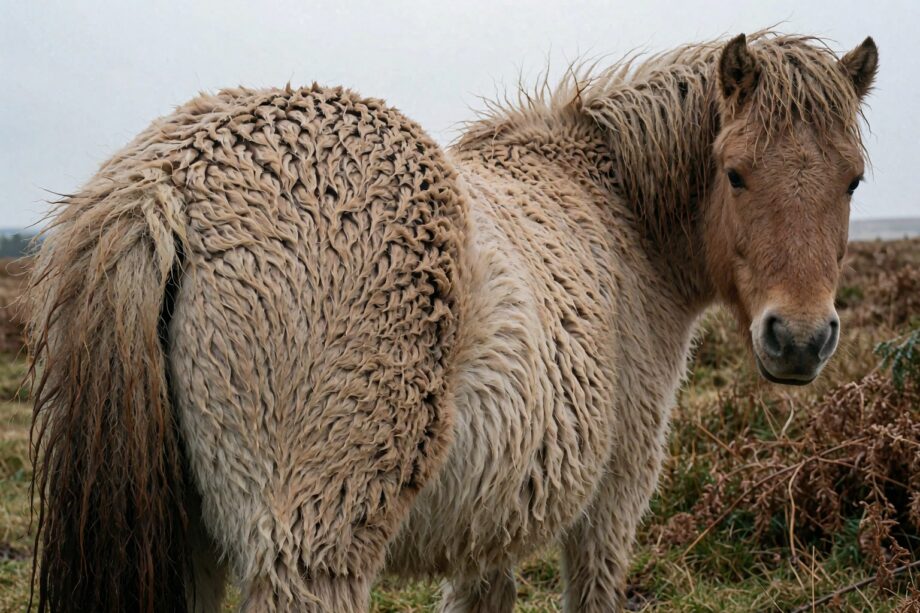
Walk onto Exmoor in January and you’ll find ponies standing out in the wind and rain with nothing on their backs, looking entirely unbothered. Meanwhile, plenty of owners a few fields over are fussing over which weight of rug to put on a horse that’s shivering by the gate. The difference isn’t toughness of character. It’s the coat, and it’s worth understanding properly before you decide what your own horse needs this winter.
Why the Exmoor pony hardly ever wears a rug
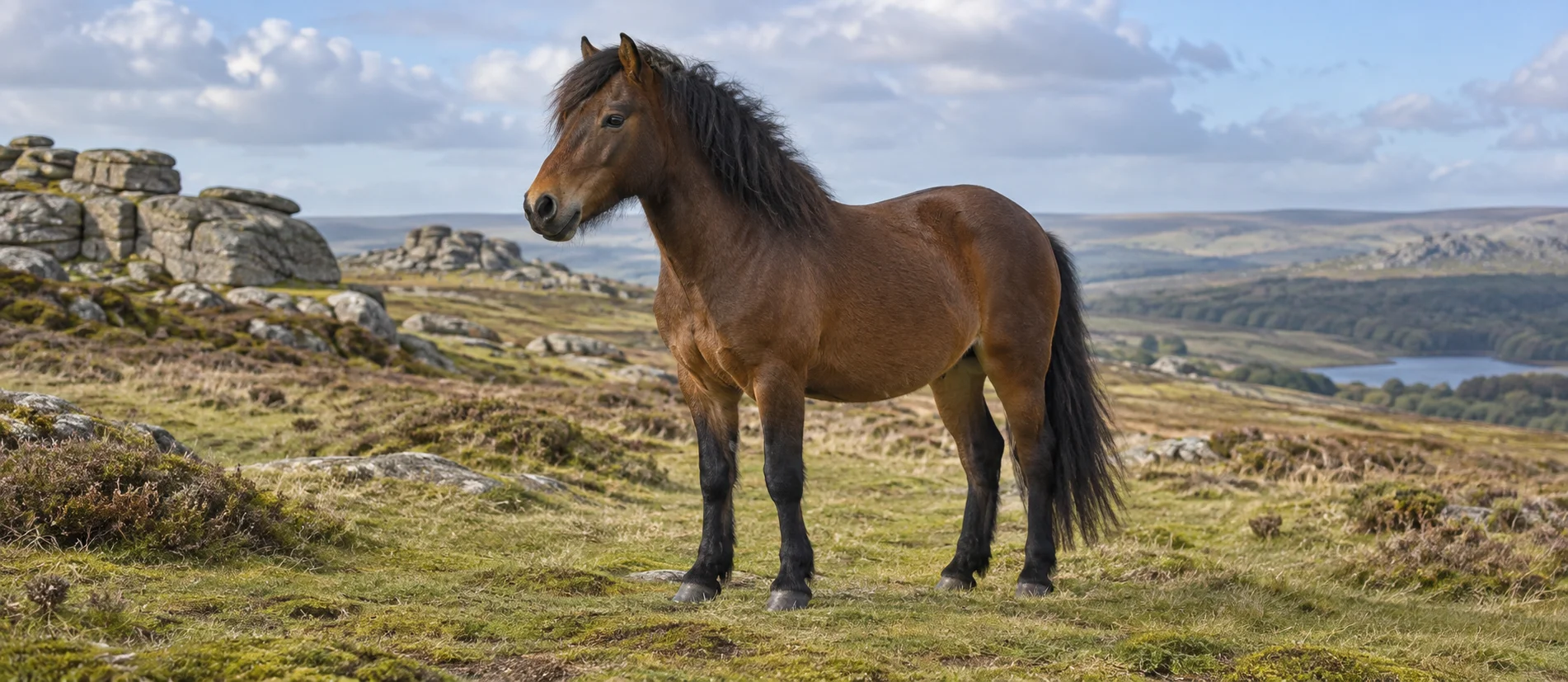
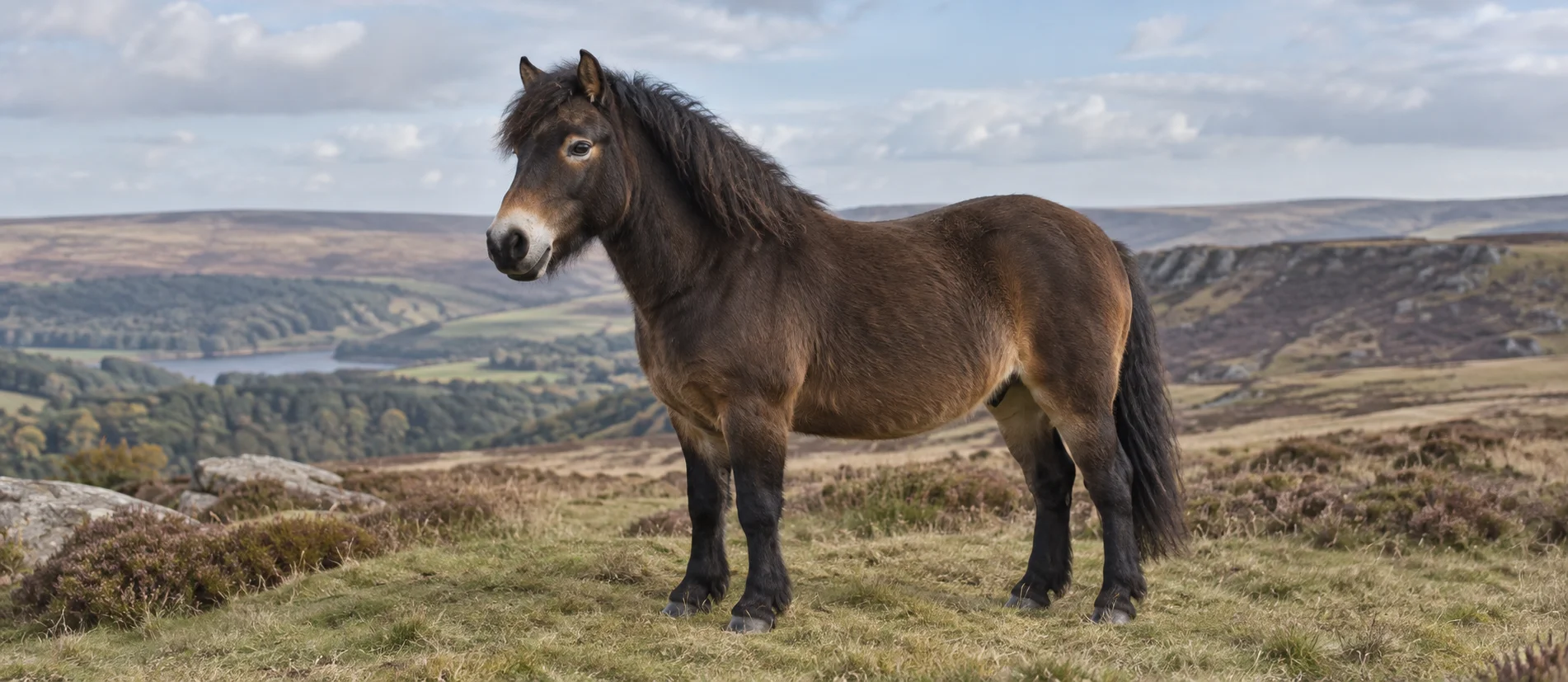
The Exmoor pony is one of Britain’s oldest native breeds, and it has lived semi-wild on the high moorland of Exmoor, on the Devon and Somerset border, for a very long time. Herds are still kept out on the open moor through the full run of the English winter, through driving rain, frost and the kind of wind that strips the leaves off a hedge in an afternoon. They aren’t rugged for any of it, and they come through it in good order, year after year.
That isn’t neglect. It’s the whole point of the breed. An Exmoor pony kept on the moor has been selected, generation after generation, for exactly this: the ability to hold its own body heat and shed weather without any help from a person at all. The Exmoor Pony Society and the breed’s long-standing conservation status with the Rare Breeds Survival Trust both reflect how much work has gone into keeping that hardiness intact, because it’s the thing that makes the breed what it is.
Most horses and ponies kept today aren’t living that life, and most haven’t been bred for generations with that single job in mind. That’s exactly why the Exmoor is such a useful place to start when you’re working out whether your own horse needs a rug. The pony that goes without one isn’t the rule for every horse. It’s the clearest possible illustration of what a coat built for the job can actually do, and the measure against which anything less hardy has to be judged.
The coat doing the work: toad eyes, an ice tail and a double layer
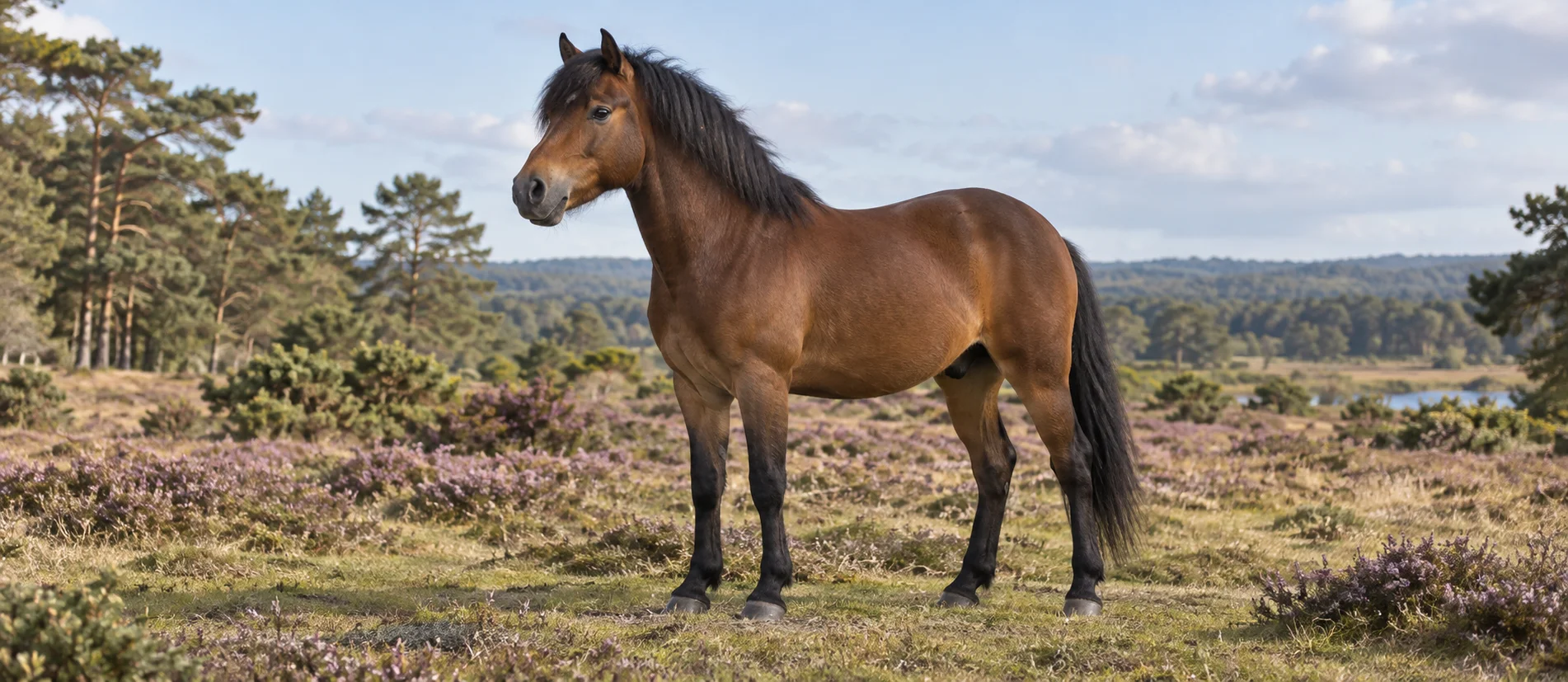
Look closely at an Exmoor pony and you’ll notice features that aren’t just for show. The “toad eye”, a slightly hooded, fleshy eyelid, keeps rain and wind off the eye itself. The pale, oatmeal-coloured muzzle, often called a mealy mouth, sits around lips and nostrils that take a battering from weather all winter. And at the top of the tail there’s a thickened fan of coarser hair known as the ice tail, which is thought to channel rainwater away from the body rather than letting it run down and soak through to the skin.
Underneath all of that sits a genuine double coat. A springy, slightly greasy outer layer of guard hairs sheds rain much the way a waxed jacket does, while a dense, soft undercoat traps a layer of warm air close to the skin beneath it. In proper cold, those guard hairs stand up slightly, a reflex called piloerection, which thickens that trapped air layer further. It’s the same basic mechanism found in any winter coat on any horse, just carried to an extreme that’s been bred into this one breed on purpose.
This is the useful bit for any owner, whatever they happen to keep. A coat like that is doing a real, physical job: trapping air, shedding water, keeping wind off the skin. A rug is there to do that same job artificially, for a horse whose own coat either isn’t built to manage it or has had that ability taken away. Understanding what the coat is meant to achieve makes it much easier to judge whether your own horse’s coat is managing it unaided, or whether it needs help.
Why most other horses aren’t built the same way
Few riding horses and ponies today live the Exmoor’s life, and most aren’t bred for it either. A warmblood, a Thoroughbred type, or any finer-skinned horse generally carries a thinner coat and less natural condition to insulate it, because that isn’t what it’s been bred to do well. None of that is a fault in the horse. It just means the comparison with a moorland pony only goes so far, and most owners are working with a different starting point.
Clipping changes the picture completely, for any breed. Removing hair for work in winter also removes the insulating air layer and the natural waterproofing in whichever areas are clipped, so a clipped horse depends on a rug to do the job its own coat would otherwise be doing. How much rug it needs depends on how much coat has come off: a full clip, which takes hair from almost everywhere except the legs, generally calls for a heavier rug than a trace clip, which removes hair only from the lower neck and belly and leaves the back and quarters covered. The less coat is left, the more the rug has to make up for it.
Age and health matter just as much as breed or clip. Older horses, and those carrying less muscle and body condition, typically feel the cold sooner than a fit, well-covered youngster, in the same way a lean Exmoor in poor condition would struggle where a well-conditioned one copes easily. A horse that’s unwell, recently lost weight, or new to living out also deserves more caution than one that’s wintered outdoors successfully for years. The British Horse Society’s general advice is to judge each horse on its own condition, age and circumstances rather than by a blanket rule for the whole yard, and that’s really the same lesson the Exmoor teaches, just read the other way round. A coat built for the job needs no help. A coat that isn’t needs real help, and the amount depends entirely on the individual horse in front of you.
Telling too hot from too cold
A cold horse typically shivers, stands hunched with its back rounded rather than relaxed, and has cold ears and lower legs to the touch. If the coat fluffs up and stays fluffed even once a rug is on, that’s worth taking seriously rather than assuming the rug alone will sort it.
A horse that’s too warm under a rug often sweats underneath, particularly around the neck, ears and flanks, even on a day that doesn’t feel especially mild. It’s worth checking a rugged horse daily, and it only takes a minute:
1. Run a hand under the rug at the neck, behind the elbow and along the back.
2. Feel the ears and the base of the tail for warmth or dampness.
3. Check the rug hasn’t slipped, and that straps aren’t twisted or rubbing.
4. Look at how the horse is standing: relaxed, or hunched and reluctant to move?
A rug hides a lot from view, so a horse can lose weight or develop a sore back underneath one that still looks perfectly tidy from across the field. If a horse is still shivering persistently once rugged, or seems quiet, off its food, or uninterested in what’s going on around it, that’s beyond ordinary rugging and worth a call to your vet rather than a guess.
No rug rule fits every horse, any more than one coat fits every breed. The Exmoor’s whole history argues for judging the animal in front of you rather than the calendar, and that’s as true for a cob in a Surrey field as it is for a herd on the open moor. For anyone who’d rather carry a bit of that hardiness with them than just read about it, Stirrup and Oak’s engraving style Exmoor pony artwork is there on apparel and archive prints, drawn from the breed that needs no rug at all.