
Horse Care · 5 November 2026
A Winter Grooming and Care Routine for Horse Owners
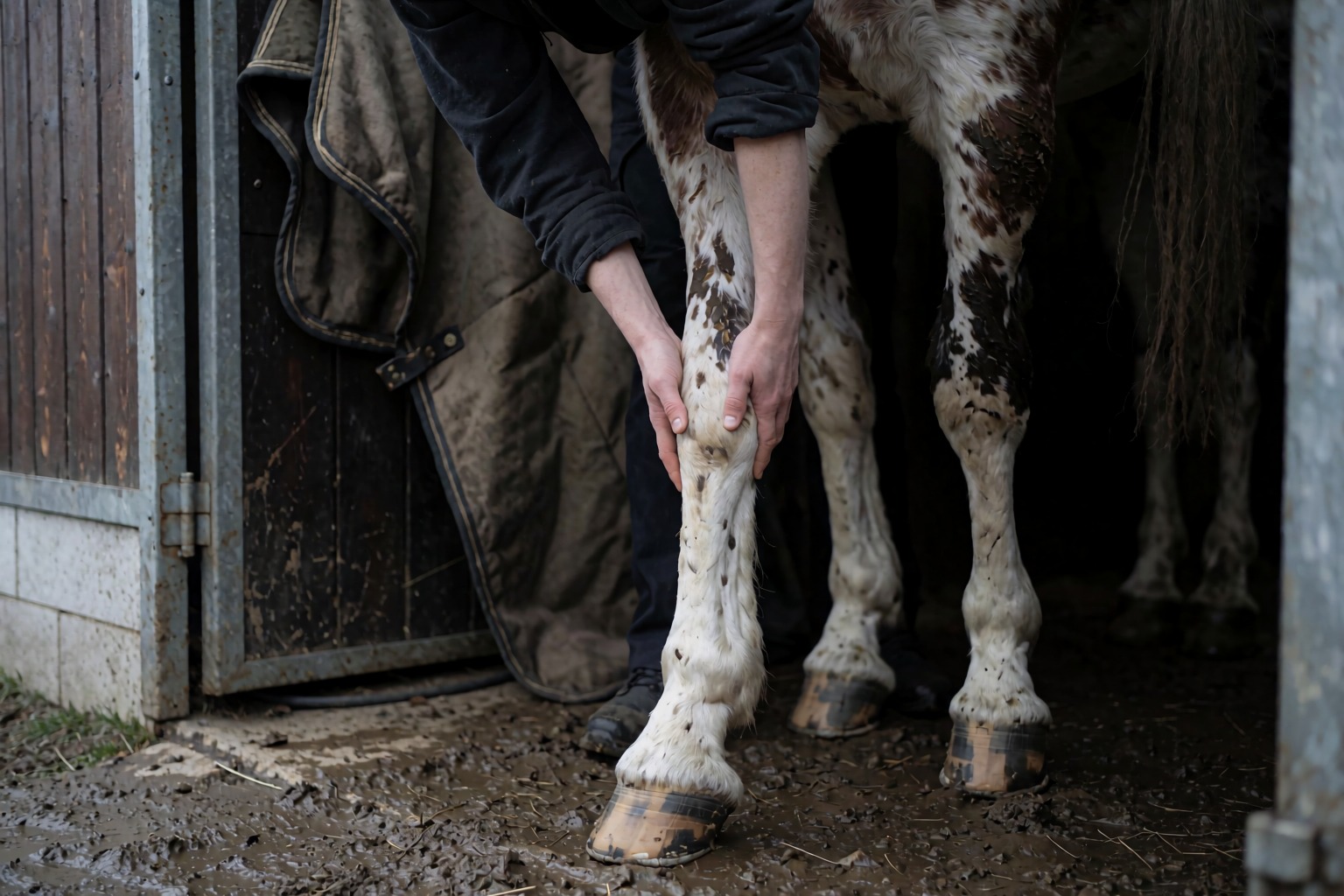
What does a horse actually need from you once the ground turns to mud and the clocks go back? Less than you might think, but it needs doing properly and it needs doing every day. Winter care isn't about doing more, it's about doing the right few things consistently: checking the legs, managing mud, keeping feet sound and getting rugging and clipping decisions right for the horse in front of you, not the calendar.
Start with the legs, because that's where winter problems begin
Before anything else, run your hands down all four legs every single day. You're feeling for heat, for swelling, for any filling around the fetlocks or cannon bones, and for cuts or scabs hidden under mud or feather. This takes two minutes and it's the single most useful habit you can build into a winter routine, because the things that go wrong in winter (mud fever, early signs of an abscess, a knock from a slip on wet ground) almost always show themselves in the legs first.
The British Horse Society's guidance on daily care is consistent on this point: a hands-on check, done the same way at the same time each day, is how you learn what's normal for your own horse, so you notice quickly when something isn't. Some stocking up overnight in a stabled horse can be completely normal and usually eases with movement. Heat, pain on pressure, swelling that doesn't ease, or lameness is different, and that's when you call the vet rather than waiting to see how it looks tomorrow. Don't try to diagnose it yourself from a photo in a forum. If a horse is not weight-bearing, or the swelling has come on suddenly and feels hot, treat it as urgent.
Check this before you check anything else, because it tells you whether the rest of the routine needs adjusting that day.
Keep mud off the skin, not just off the coat
Mud itself isn't the problem. The problem is what lives in it. Mud fever is caused by bacteria, most commonly Dermatophilus congolensis, which thrive in exactly the conditions a British winter produces: skin that's wet for long periods, softened, and then repeatedly chilled and warmed. World Horse Welfare's advice is to keep the lower legs as dry as practically possible, which in reality means not hosing mud off and leaving legs wet, since damp skin left standing is worse than mud left to dry and brush out.
So the practical routine looks like this. If the legs are muddy but dry, brush the mud out rather than washing it. If you do need to wash, dry thoroughly afterwards, ideally with a clean towel rather than letting legs air dry in a draughty stable. Some owners use a barrier cream or petroleum-based product on vulnerable areas like the back of the pastern before turnout, which can help stop mud and moisture sitting against the skin, though it isn't a substitute for drying legs properly. Check pink skin and white legs especially closely, as sensitivity to mud fever often shows there first.
If you do see the early signs of mud fever, which are scabby, crusty patches, usually on the back of the pastern or heel, with the hair matted into little tufts, don't just keep riding through it and hope. Mild cases often respond to keeping the area clean and dry and removing scabs gently, but if it's spreading, if the leg is swollen, or if your horse is sore to touch, that's a vet call, because it can need antibiotic or anti-inflammatory treatment and left untreated it can become genuinely painful and harder to shift.
Feet need more attention in winter, not less
Wet underfoot conditions mean feet are picked out properly at least once, ideally twice, a day. Mud packed into the sole and around the frog holds moisture against the foot, and that's exactly the environment thrush needs to take hold. Thrush shows up as a black, foul-smelling discharge, usually worst around the frog, and while a mild case often clears up once the foot is kept cleaner and drier, a horse that's sore on the frog or whose thrush keeps coming back needs the farrier or vet involved, not just a stronger shop-bought spray.
Winter is also when owners are most tempted to let farrier visits slip, especially if the horse isn't being ridden as much. Don't. Feet keep growing regardless of the weather or the workload, and a horse standing in wet ground for long periods, with feet left too long between trims, is a horse set up for cracked, weakened hoof walls just when it needs sound feet most. Keep the farrier on their normal cycle through winter, typically every five to eight weeks depending on the individual horse, and flag any softening, smell, or sensitivity to them at the visit rather than waiting for the next one.
After you've picked out and checked the feet, that's also your moment to run a hand over the lower leg again. Routine and leg check go together, not as two separate jobs.
Rugs and clipping: get the questions right, not just the answer
There's no fixed temperature that tells you when a horse needs a rug. It depends on the individual: how much natural coat they're carrying, whether they're clipped and how much, their age, their workload, their weight and their general health. World Horse Welfare and the British Horse Society both make the same core point, which is that the decision should be based on the horse in front of you, not a rule of thumb copied from someone else's yard. A native-type pony with a full winter coat and good body condition may need no rug at all even in frost, while an older horse, a poor-doer, or one clipped out for winter work will need one far sooner.
If you do clip, think about what the clip is for before you choose the pattern. A full clip suits a horse in hard, sweaty work through winter, but it also means that horse now relies entirely on rugs for warmth, so your rugging plan needs to be solid from the day you clip, not an afterthought. A trace or blanket clip leaves more natural protection on the back and quarters and suits a lighter workload.
Whatever you choose, check under the rug regularly, not just when you put it on. Rugs hide weight loss and weight gain extremely well, and a horse can be quietly losing condition under a well-fitted rug for weeks before it's obvious at a glance. Run your hands over the ribs, the spine and the hips at least weekly, the same way you check the legs daily, and adjust feed or rugging if what you feel doesn't match what you expect. Also check the rug itself for rubbing, especially at the shoulders and withers, and for straps that have loosened as the horse's coat and condition change through the season.
None of this is complicated once it's a habit. Legs checked daily, feet picked out and inspected daily, mud managed by drying rather than just washing, and rugging and condition reviewed honestly every week rather than assumed. That's the whole routine, and it's the same four things the British Horse Society, World Horse Welfare and most vets keep coming back to, because they're the things that actually prevent the problems winter causes, rather than just treating them once they've arrived.