
Horse Habits · 9 November 2026
Why Do Horses Roll, and When Should You Worry?
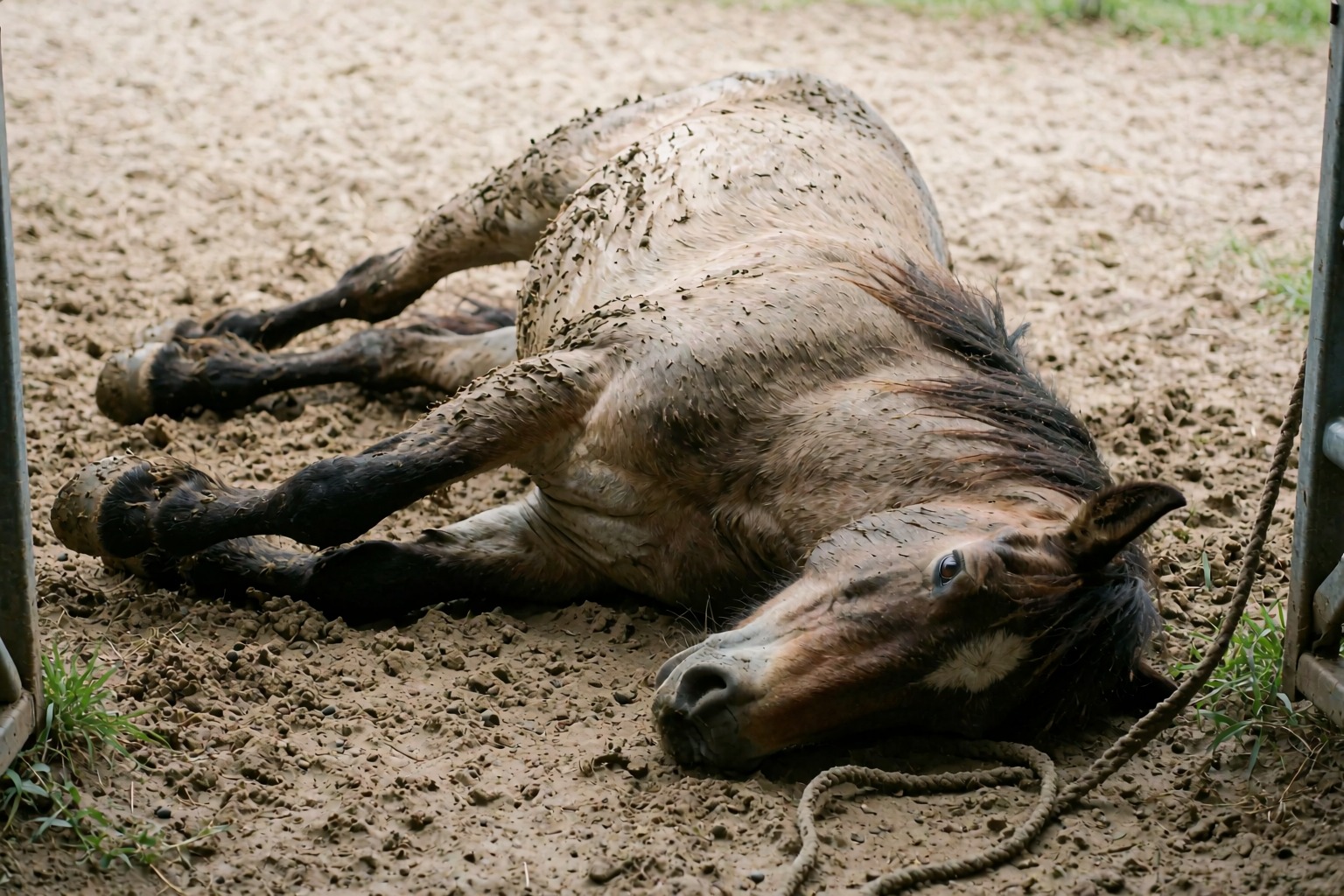
You're leading your horse back from the field and he drops like a stone, right there in the gateway, and rolls with his legs in the air and a daft look on his face. Is he happy, itchy, or in trouble? Most of the time, he's just having a good scratch. But rolling is one of those habits that can mean three or four completely different things, and only one of them needs you to pick up the phone.
Here at Stirrup & Oak we spend as much time thinking about horses' habits as we do about their history, because the two are tied together. A behaviour this old, this universal across every breed we've written about, tells you something about what a horse actually is under the rugs and the headcollar. So let's take rolling apart properly: the itch, the dry-off, the scent, the comfort, and the one version that isn't comfort at all.
Is rolling just scratching an itch?
Yes, a lot of the time it is exactly that. A horse's skin is a sensitive, twitchy thing, and there are places a hoof or a lip simply cannot reach: the length of the spine, between the shoulder blades, along the flank. Rolling lets him work his whole back against the ground the way you might work your own shoulder blades against a doorframe when nothing else will shift the itch.
Think of it the way you'd think of a dog having a good shake after a bath, or a cat stretching out on a warm patio slab. It's maintenance. Rolling is generally considered one of the normal comfort behaviours owners should expect to see, alongside stretching and shaking off after a lie-down, and it's one of the easiest signs that a horse is relaxed enough in his surroundings to make himself vulnerable for a minute or two.
That vulnerability matters more than people realise. A horse lying flat out, legs away from him, can't get up in a hurry. In the wild a horse only rolls like that when he feels safe enough to risk it, which is partly why a horse who rolls freely in his field or stable is usually a horse who trusts the space he's in. A horse who never rolls in company, but will roll alone, is often telling you something about where he feels safest, too.
Why does my horse roll after a wash or in the rain?
This one trips a lot of owners up, because it can feel like your horse is deliberately undoing twenty minutes of work with a hose and a sweat scraper. He isn't being awkward. A wet coat dries slowly and unevenly, and rolling in dry dust, sand or even a clean dry stable bed helps draw moisture out and get air moving through the coat faster than standing still would.
It's the equine version of towelling off rather than air-drying, except the towel is the ground. Horses will often roll straight after rain or after being hosed down for exactly this reason: it's a practical response to a wet coat, not a protest. If you've just bathed him for a show and he heads straight for the one patch of mud in the yard, that's not spite. That's a horse doing what a horse does.
The frustrating part is timing. A horse doesn't distinguish between "wet because it rained" and "wet because you spent half an hour getting him show-ready." Both situations itch the same way, and the instinct to roll doesn't know the difference. If you need him clean for a set period, the practical answer is a dry stable or a clean, dry area to stand in rather than turning him straight out onto grass or into a muddy gateway.
Does rolling have anything to do with scent?
It does, and this is the part people find most surprising. Horses are herd animals with a strong sense of smell, and rolling in a particular spot, especially somewhere another horse has rolled or stood, helps spread and pick up scent across the coat. Stallions in particular will often roll near droppings or in a spot already marked by another horse, which is thought to be part of how scent is shared and read within a group.
It isn't only a stallion thing. Geldings and mares roll in company too, often choosing the same worn patch of a field that every horse in the herd uses. If you've ever noticed one bald, dusty circle in an otherwise green field, that's usually the communal rolling spot, used by the whole herd the way a doormat gets used by everyone in a house. It's a shared habit as much as an individual one, which is part of why a newly introduced horse will often go and roll in that same patch early on, almost like leaving his own name on the group. Watch a settled herd for long enough and you'll usually find each horse has a preferred spot within that shared patch too, a few feet from the next one, like regulars at the same table.
When does rolling mean something is wrong?
Here's the line that matters most, and the one we'd rather you read here than learn the hard way. Normal rolling is a quick, deliberate drop, a roll from side to side, a shake off, and back on his feet within a minute or two, followed by him carrying on exactly as before: grazing, dozing, having a scratch against the fence post.
Colic-related rolling looks and feels different. In general, repeated or violent rolling, especially alongside pawing at the ground, sweating for no clear reason, going off his food or an inability to settle, is treated by vets as a classic sign of abdominal pain, and should be taken seriously rather than watched and waited on. We go through the full list of signs, and what to do about each one, in our dedicated piece on colic. The short version here: if your horse is rolling like that, call your vet and describe exactly what you're seeing. Colic is one of the few situations in horse ownership where acting fast genuinely changes the outcome.
While you wait for advice, keep him as calm and safe as you reasonably can. Many vets will tell you not to physically stop a horse rolling if he's determined to, since a horse in pain can be surprisingly strong and you risk injury trying to haul him up, but do remove anything nearby he could hurt himself on, and don't leave him unattended if you can help it. This is a call-the-vet situation, not a wait-and-see one.
So what should you actually watch for?
Most rolling is the easiest, most reassuring thing you'll see your horse do all day. He's scratching an itch he can't reach any other way, drying off after rain or a wash, or doing something as old as the herd itself with his own scent. If he rolls, shakes off, and goes back to grazing like nothing happened, that's a horse behaving exactly as he should.
The version to take seriously is the one that repeats, that looks frantic rather than satisfied, and that comes with sweating, pawing or a horse who won't settle. Learn that difference once and you'll never second-guess it again, because the two really don't look alike once you've seen them side by side.
It's a small habit, but it tells you a lot: about comfort, about trust, and occasionally about something that needs your vet on the phone within the hour.